Queensland Environmental Reforms: What Comes Next
In June 2026, key legislative reforms affecting mine rehabilitation, surrender of environmental authorities, groundwater management, environmental assessment and enforcement commenced under Queensland’s Environmental Protection (Efficiency and Streamlining) and Other Legislation Amendment Act 2026 (Qld) (Act).
The Act also provides a new framework for the identification and protection of significant environmental values (SEVs), the regulation of environmentally relevant activities (ERAs), code-managed ERAs and ERA codes, which are yet to commence and remain subject to the finalisation of other supporting instruments.
For project proponents, resource tenure holders, existing environmental authority (EA) holders, councils and landholders, the immediate task is twofold: adapting to the reforms which are now operational and preparing for a further restructuring of Queensland’s environmental licensing system.
Mine rehabilitation: public-interest scrutiny remains
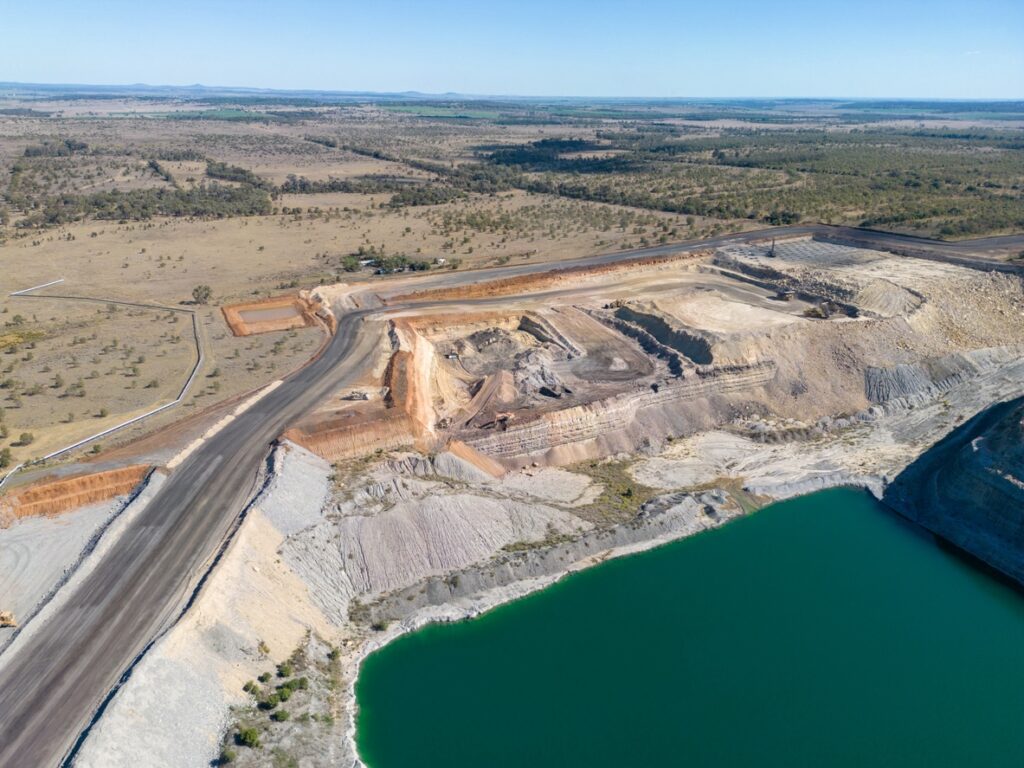
The Act removes the separate public interest evaluation (PIE) process for certain proposed non-use management areas (NUMAs) created as a result of mining activities. A NUMA is an area of land that cannot be rehabilitated to a stable condition capable of supporting a post-mining land use (PMLU) and must instead be subject to ongoing management under an approved progressive rehabilitation and closure plan (PRCP) schedule.
Prior to the Act commencing, where a proposed PRCP identified land as a NUMA (such as a residual void requiring ongoing management after mining ceases), the Department of the Environment, Tourism, Science and Innovation (Department) was required to engage an independent, appropriately qualified entity to undertake a PIE. The reasonable costs of the PIE were recoverable from the applicant. No application had proceeded through the PIE process before the Act commenced.
The Act removes the separate PIE process. An applicant proposing a NUMA must now address specified public-interest considerations in a proposed PRCP, and the Department must consider those matters when deciding whether to approve a PRCP schedule.
The removal of the PIE process does not remove community consultation from the PRCP framework. The rehabilitation planning part of a proposed PRCP must continue to record consultation undertaken in developing the plan and explain how ongoing consultation about rehabilitation will occur. The Department’s updated guideline also continues to require applicants to document how community input has informed proposed PMLUs and NUMAs.
For existing resource activities transitioning into the PRCP framework, the Department may have regard to the historical context of activities, constraints created by existing infrastructure and approvals, and the practicality of applying contemporary best-practice management standards when assessing the proposed methodology for managing a NUMA and supporting the management milestones in the proposed PRCP schedule.
This may be relevant to mature operations and legacy assets being transitioned through the Environmental Protection Act 1994 (Qld) (EP Act) framework. It does not create a general exemption from contemporary rehabilitation obligations. A residual void is not automatically a NUMA, and the approved closure outcome will depend on the PRCP schedule and the circumstances of the site.
PRCP audits and residual-risk payments
The former automatic three-year PRCP schedule audit cycle has been replaced by audits directed by the Department where an audit is considered necessary or desirable.
The change may avoid audits being required when little meaningful rehabilitation activity has occurred. Holders of approved PRCP schedules should nevertheless maintain robust milestone evidence, annual-return information and internal assurance systems so they remain audit-ready.
The Act also introduces a clearer payment period where a “residual-risk” requirement is imposed as part of the surrender of an environmental authority. “Residual risk” is the risk that, despite rehabilitation and appropriate management, future remedial action or ongoing management may be required due to resource activities having been undertaken on the land.
Generally, a residual-risk payment must be made within six months after notice requiring payment is given by the Department. The payment period may be extended once, before it expires, by way of written agreement with the holder of the resource EA. The EA surrender does not take effect until the requirement is satisfied. If payment is not made within the applicable period, the decision to approve surrender of the EA lapses and a new surrender application must be made.
Until any EA surrender takes effect, the EA continues in effect, along with the requirement to make financial provisioning and fee payments and meet compliance obligations. EA holders seeking to surrender an EA should therefore address closure funding, residual-risk assessment and post-surrender management planning as part of any EA surrender process.
Groundwater impacts and bore-owner rights
The period for preparing a further underground water impact report (UWIR) has increased from three to five years. The obligation generally falls on the relevant resource tenure holder, although the Office of Groundwater Impact Assessment (OGIA) prepares the UWIR for a declared cumulative management area (CMA).
The longer reporting cycle is not to remove oversight between reporting periods. Annual review requirements will continue where a UWIR predicts an immediately affected area or long-term affected area as a result of the undertaking of the resource activity. The chief executive of the Department may also require an earlier UWIR or an amendment where predictions or circumstances materially change.
For bore owners, the Act has created a new pathway enabling a bore owner to apply to the chief executive for a bore assessment notice where a make-good agreement has not been entered into for the bore.
An application to the chief executive must be supported by relevant information, including any available evidence about the bore’s capacity and changes in its performance. If satisfied that the statutory requirements are met, the chief executive may issue a notice to the relevant resource tenure holder requiring the bore to be assessed under Chapter 3 of the Water Act 2000 (Qld).
This gives bore owners who are concerned that their bore may be affected by resource operations a direct means of seeking regulatory intervention, rather than relying solely on the UWIR process. Bore owners considering an application should retain contemporaneous records of water levels, pumping capacity, water quality, maintenance and changes in bore performance to support any engagement with the chief executive.
The Act also introduces new reporting and notification duties for relevant resource tenure holders, including requirements to:
- notify the chief executive and the OGIA within 20 business days after entering into a make-good agreement;
- for tenure holders within a cumulative management area, notify the OGIA within 20 business days of specified changes that may affect implementation of the baseline-assessment strategy; and
- report annually to the OGIA on the status of make-good obligations and the implementation of make-good measures.
Resource tenure holders should ensure their systems identify which obligations apply and capture the information needed to comply.
Environmental assessment and enforcement
Draft terms of reference for an environmental impact statement (EIS) are no longer separately subject to public notification.
A submitted EIS remains subject to statutory notification, submission and response processes, and the final terms of reference for an EIS must still be published. The reform has the effect of removing an earlier consultation stage, rather than public participation in the EIS process itself.
For project proponents, this may reduce duplication and streamline the early assessment stages. For councils, landholders and community stakeholders, it increases the importance of identifying projects and engaging in the assessment process while the project is under assessment.
The Act has also increased the timeframes for any non-compliance enforcement proceedings under the EP Act so that summary offences now have a two-year limitation period. A three-year period applies to indictable offences prosecuted summarily and other specified offences. Offences committed before commencement of the Act remain subject to former limitation periods.
What is still to come?
The most significant structural reforms to Queensland’s environmental licensing framework have been approved but have not yet commenced operation. These include:
- the SEVs framework;
- a new risk-based framework for determining which activities are regulated as ERAs; and
- the code-managed ERA regime, under which prescribed lower-risk activities may operate under “enforceable ERA codes” rather than by way of an EA.
The Act provides a pathway for environmental values to be declared as SEVs by regulation or environmental protection policy, including by reference to all environmental values within a particular area. Examples given in the Act include protected areas, marine conservation park zones and declared fish habitat areas.
An activity’s potential adverse effect on an SEV may inform whether it is prescribed as an ERA and the level and form of regulatory oversight that applies. Proponents should therefore monitor the supporting instruments and assess project sites and potential impact areas against the final SEV declarations, spatial information and applicable criteria during site selection, due diligence and project design.
In terms of existing EAs, the Department indicated that Queensland had approximately 9,300 EAs, including more than 5,000 for resource activities that could potentially lend themselves to codification.
This does not mean that all existing EAs will transition to ERA codes. The Department indicated that activities would be reviewed progressively to determine whether their environmental risks are sufficiently understood and can be effectively managed through standardised code conditions.
Small-scale mining is expected to provide the first practical test of code-managed regulation. The Department identified more than 2,000 small miners, comprising activities currently undertaken without an EA and some lower-risk mining activities conducted under an EA that may potentially be suitable for regulation under an ERA code. The Department has indicated that it proposes first to transition small-scale mining activities that currently do not require an EA to regulation under an ERA code, before considering lower-risk mining activities currently regulated under an EA and other ERA classes.
For existing EA holders, the outcome will depend on the relevant activity and the transition provisions accompanying each code. EA holders should not assume that an ERA code will be available, that an EA will automatically convert to code conditions or that every activity will have the same transition option.
Although these further reforms are not yet in effect, their potential reach is significant.
What should be done now?
EA holders and proponents should identify how the commenced provisions may affect current applications, approvals, surrender strategies and compliance systems.
Mining operators should review their PRCP transition status, rehabilitation and management milestones, community-consultation records, compliance record-keeping systems, audit readiness and residual-risk funding.
Resource tenure holders should update their UWIR, bore-assessment, make-good and statutory reporting systems.
Bore owners should preserve evidence of bore performance and obtain advice before entering into a make-good agreement or applying for a bore assessment notice.
Businesses should also monitor development of the SEV framework, ERA regulations and ERA codes. Those instruments will determine which activities are regulated as ERAs, which may operate under code-managed regulation, the conditions that apply and how existing approvals are transitioned.
The immediate reforms are now operating, but the most consequential decisions about Queensland’s future environmental licensing framework will be made through proclamation, regulations, environmental protection policies, ERA codes and associated transitional instruments.
Please contact Anna Vella, Aaron Beale or Andrew Williams if you would like to discuss how these reforms may affect your operations or projects
All references to legislation are references to the legislation current as at 31 July 2026. This is general advice only. Specific advice should be sought in each instance. © P&E Law Pty Ltd 2026