Compliance notices: ten practical checks for Queensland councils
A well-prepared compliance notice helps your council address non-compliance and achieve better outcomes for the community. Getting the process right matters – not only for the notice recipient, but also for the officers responsible for making and implementing the decision.
Compliance notices can require action, restrain conduct or prevent an event. They are commonly issued under local laws and may also be available under legislation such as the Animal Management (Cats and Dogs) Act 2008 (Qld).
For local government officers, the challenge is to turn the relevant legal requirements and evidence into a notice that is clear, properly authorised and practical to comply with.
Errors can undermine enforcement, delay action and expose councils and officers to avoidable cost and risk.
Drawing on our experience advising local governments, we have identified ten practical checks to help officers avoid common pitfalls.
Start with a form that clearly identifies your council, then work through the following checks before giving the notice.
1. Identify the correct statutory power
Identify the provision that gives your council power to issue the notice. An error at this first step can have serious consequences. In one matter, entry occurred under the wrong power, with police support. The magistrate indicated that those forcing entry could have faced criminal charges.
2. If an offence is alleged, address every element
Not every compliance notice alleges an offence. Where yours does, identify each element of the offence and the facts relied on to establish it.
Do not assume that a general description of the conduct will be enough.
In Benfer v Sunshine Coast Regional Council [2019] QPELR 613, Judge Kefford emphasised the need for precision in identifying the facts that satisfy each element of an alleged offence.
3. Consider all relevant decision-making requirements
Start with the local law provisions, but do not stop there. Consider what other legal requirements apply to the decision.
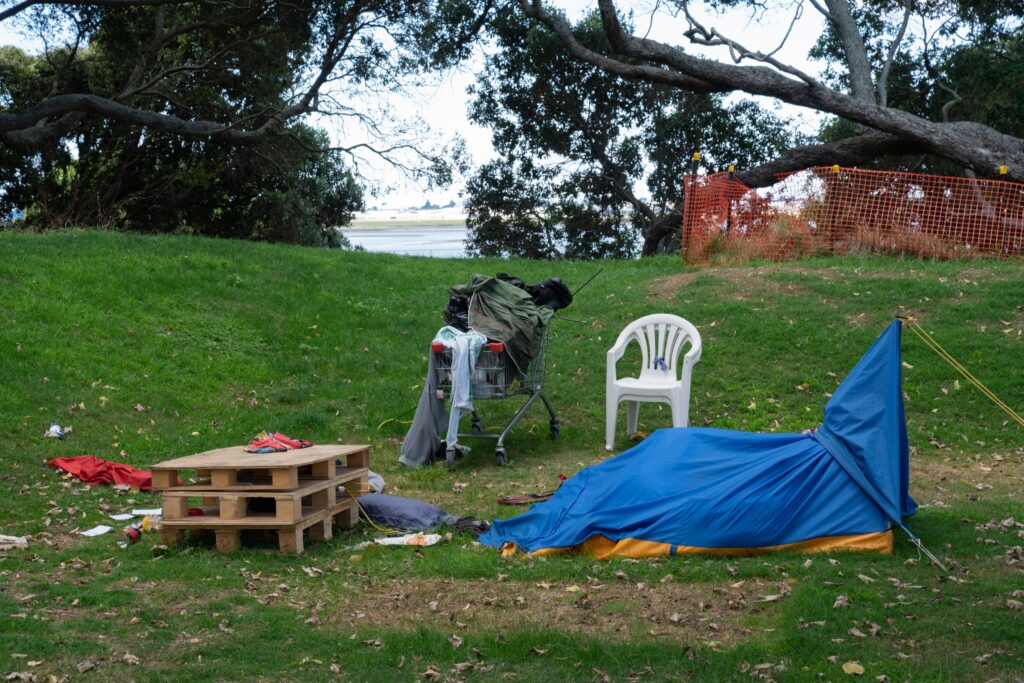
In Bobeldyk v Moreton Bay City Council [2026] QSC 27, the failure to consider the Human Rights Act 2019 (Qld) arose in the context of moving people experiencing homelessness from a local government-controlled area.
Procedural fairness can also be critical. In Leahy v Brisbane City Council (2022) 11 QR 809, a decision approving an advertising device was set aside where procedural fairness required consideration of the impacts it would have on a person’s views.
4. Confirm who must make the decision
Check whether the relevant local law gives the power to an authorised person or to the council.
Where the power rests with the council, the decision will often be made by a delegate.
Identify the correct decision-maker before the notice is prepared.
5. Check the officer’s authorisation and delegation
Do not assume that an officer’s role or job title is sufficient. Check the relevant authorisation or delegation.
Actions taken without the necessary authority can be set aside.
In Caloundra City Council v Minister for Natural Resources [1999] QSC 184, the Supreme Court quashed a decision where the mayor had heard and decided land acquisition objections without the necessary delegation.
Check and confirm the authorisation of an authorised person to give the notice.
If the officer is acting as a delegate, confirm that the delegation covers the decision.
In both delegations and authorisations, check any conditions or limits on the power being exercised.
6. Ensure the authorised person forms “a reasonable belief” of a contravention and has fulfilled the requirement to state their belief
If the power depends on an authorised person having a “reasonable belief” that a contravention has occurred, that person must form and state the belief. In Bobeldyk, the Court considered the authorised officers’ discretion and concluded on the evidence that:
“….no real discretion was given to the authorised officers on:
(a) Whether to issue the notices.
(b) Whether he or she formed the view that an offence was committed.”
The key point for councils: the authorised person must form the required belief and cannot simply act at the council’s direction.
7. Identify the correct recipient
Check precisely who the relevant provision allows the notice to be given to, including where a company or other legal entity is involved. In Serratore & Anor v Noosa Shire Council [2021] QPEC 21, the enforcement notices incorrectly identified the landowners rather than the person who caused the clearing.
Use title searches, company searches and council records to establish the correct party. Ownership alone may not answer the question.
8. Explain the material facts and supporting evidence
When a compliance notice is given, it must be accompanied by an information notice.
The information notice must give reasons for the decision. Those reasons should explain the findings of fact and the evidence relied on – not simply state a conclusion.
Section 27B of the Acts Interpretation Act 1954 (Qld) requires that, where reasons are to be given, they:
“must also—
(a) set out the findings on material questions of fact; and
(b) refer to the evidence or other material on which those findings were based.”
Analyse the evidence, identify the findings it supports and ensure that proper lines of enquiry have been followed.
9. Make the required steps clear and precise
A compliance notice recipient should be able to understand exactly what they must do. This matters because non-compliance can lead to penalties.
By analogy, in considering an enforcement notice under the Planning Act, the Court stated: “This indicates that the enforcement notice should set out the nature of the alleged offence, and the details of the actions required with respect to it, with sufficient certainty and particularity so that a person of ordinary intelligence and experience can ascertain from the document exactly what is required.” Benfer v Sunshine Coast Regional Council [2019] QPEC 6.
Be specific about each action required. Avoid leaving the recipient to work out what compliance means.
10. Allow a reasonable and practical time to comply
Compliance notices are typically required to allow a “reasonable time” for compliance. Consider both the consequences of delay and how long the required steps will realistically take.
In Sea Swift Pty Ltd v Torres Strait Island Regional Council (No 2) (2023) 16 QR 136, the Court considered the reasonableness of a requirement to provide invoices concerning shipping operations at council facilities:
The timing made it impossible for Sea Swift to provide the required information within seven days. TSIRC’s arguments that Sea Swift must have been aware of the extent of its non compliant self-reporting as a result of the conduct of the proceedings in the Federal Court is no answer to the argument that the seven-day appeal right was illusory, arbitrary, capricious and lacking any justification in the circumstances. Sea Swift Pty Ltd v Torres Strait Island Regional Council (No 2) (2023) 16 QR 136.
Match the timeframe to the urgency of the issue and the practical steps needed to comply.
Need a second view before giving a notice?
Allow time to check the legal basis, decision-making process and drafting before the notice is given. A careful review at that stage can help avoid problems later.
If you are unsure about a proposed notice or a difficult compliance issue, you are welcome to contact our local laws team to discuss how we can assist.
We advise and act for local governments giving compliance notices, as well as recipients of notices throughout Queensland. That experience on both sides helps us identify potential issues and provide practical advice to councils.
Our focus is on helping to get the process right, so your council can take effective action for the community.
All references to legislation are references to the legislation current as at 10 Nov 2026. This is general advice only. Specific advice should be sought in each instance. © P&E Law Pty Ltd 2026